Oct 6, 2026Buyer Guides
Oil Filter Wrench Set Buying Guide
Compare oil filter wrench sets by wrench design, size coverage and material. A practical buying guide for importers and distributors.
When buyers compare oil filter wrench sets, three questions matter early in the selection process: the wrench designs the market needs, the filter sizes the set covers, and whether the supplier documents both.
This guide covers the common wrench designs found in the market, how to read size coverage on a set listing, the fitment problems buyers run into, and what to put in an RFQ.
1. What an Oil Filter Wrench Set Does
Oil filter wrenches are commonly used to remove spin-on filters — the all-in-one cans that screw into the engine — when hand removal is difficult. Installation is a different job: the new filter is threaded in and tightened by hand to specification, without tools.
Cartridge filter housings often require a tool matched to the housing design rather than a wrench that grips a spin-on filter can, so the mix of spin-on and cartridge applications in a market directly affects what a wrench set needs to cover.
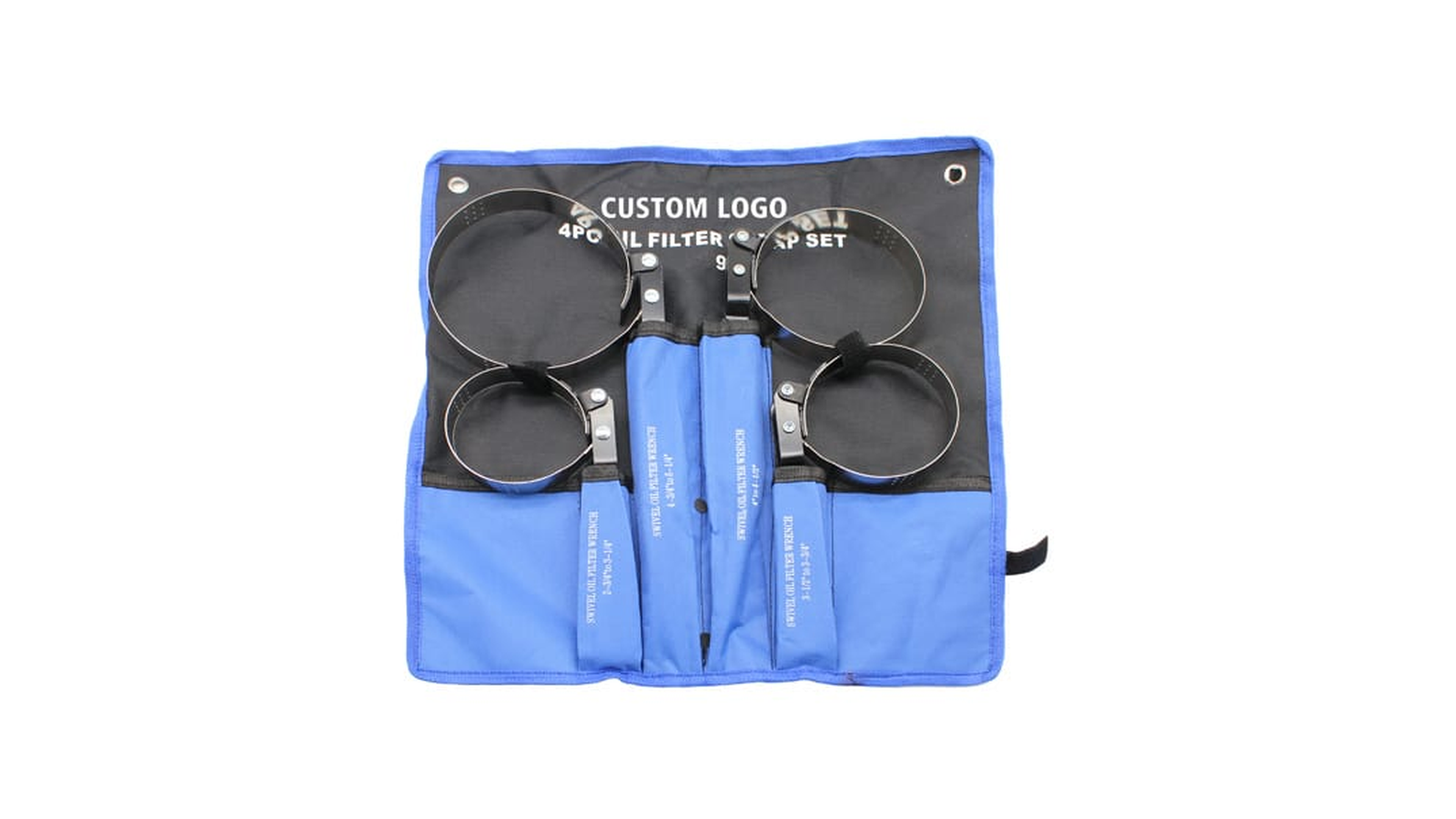
TEKO’s 4pcs Stainless Steel Oil Filter Wrench Set is specified as a four-piece stainless steel set covering filter sizes from 2-3/4 to 5-1/4 inches (69.85 to 133.35 mm) in four published ranges, supplied in a canvas roll bag. For TT-OIL-001, use the published size ranges as the confirmed product specification. The available source material does not assign the set to a named wrench type or specific filter-housing design, so application fit should be confirmed separately for the buyer’s target range.
2. Common Wrench Designs in the Market
Common wrench designs include cap-style tools, band and strap wrenches, swivel-style wrenches, jaw and plier styles, and the plain hex sockets used on some filter covers. Each interacts with the filter differently:
Cap-style tools fit over the end of the filter and engage it by diameter and flute count. They are usually listed by a single nominal diameter, and both the diameter and the flute count must match the filter.
Band and strap designs wrap the filter body and tighten as torque is applied, so one tool covers a range of diameters rather than a single size.
Swivel-style wrenches: some use a pivoting handle to improve access around obstructions, while other gripping designs use moving jaws. "Swivel" is a product-description term rather than a standardized wrench category.
Jaw, claw and multi-leg styles grip the filter body from the side or front, and several cover a wide diameter range on a single tool.
Hex sockets are also sold for filter covers with hex flats, matched to the cover size rather than to a spin-on can.
Suppliers document these differently: cap tools are listed by diameter and flute count, while range-style designs are listed by the diameters they span. Check which type of documentation you are reading before comparing numbers.
3. Reading Size Coverage on a Set Listing
Cap-style tools are documented by a single nominal diameter plus a flute count — for example, a 65 mm, 14-flute cap wrench. Nominal size labels can vary between suppliers, so buyers should not rely on the diameter number alone: for cap-style tools, confirm both the stated diameter and the flute count against the intended application.
Range-style tools are documented by the diameters they span. Wider span means wider coverage on paper, but the span alone does not tell you how the tool grips the filter — which is why the configuration details in the listing matter alongside the numbers.
TEKO’s 4-piece set, for example, is documented in four ranges: 2-3/4 to 3-1/4 inches (69.85-82.55 mm), 3-1/2 to 3-3/4 inches (88.9-95.25 mm), 4 to 4-1/2 inches (101.6-114.3 mm), and 4-3/4 to 5-1/4 inches (120.65-133.35 mm). Set those published ranges against the filter diameters common in your market, range by range — that comparison is what tells you whether one set covers your requirement.
4. Fitment Realities: Access, Clearance and Slipping
Three practical points are worth checking with a supplier: access and clearance, grip, and the risk of damaging the filter or housing.
Access and clearance: wrench designs differ in how they reach the filter — some work from the front of the filter, some from the top, and pivoting handles exist to clear surrounding components. The space around the filter in common applications should guide the designs you stock.
Slipping is a fit and grip issue buyers should ask about. For cap-style tools, check the stated diameter and flute count. For range-style tools, confirm the working diameter range and intended filter type.
Damage to the filter or housing: plastic caps and housings can crack under the wrong tool. Suppliers should be asked directly what each wrench design is suited for, and what it should not be used on.
Written answers to these points make supplier quotations easier to compare on the same basis.
5. What to Verify for Your Target Market
Before ordering stock for a market, confirm four points:
Filter styles: the mix of spin-on and cartridge applications your customers service, and what tool each requires.
Common diameters: the filter sizes that dominate your market, matched range by range against the sets you compare.
Tool material: confirm the material if it is part of your purchasing specification. Do not use material alone to infer application compatibility.
Documentation and spares: ask whether the size lists, instructions and replacement components are documented and available separately.
Written answers to these points make supplier quotations easier to compare on the same basis.
6. What Buyers Should Confirm Before Ordering
Before requesting a quotation, put these points into your inquiry:
Target market and the vehicles your customers service
Filter or housing type to be serviced
Required diameter range
Reference filter, housing or sample, if available
Estimated quantity
Branding or packaging requirements, if any
If you are building out an oil & fluid service tools range, comparing wrench sets like for like — wrench design, size documentation and materials — keeps quotations comparable across suppliers. And if you send branding or private label requirements with the first inquiry, packaging and labeling options can be reviewed alongside the product specification.
Frequently Asked Questions
How do I choose between the main wrench designs?
Match the design to the job: cap-style tools need the filter diameter and flute count to match exactly; band and range-style designs cover a spread of diameters; jaw and plier styles grip the filter body where access allows. The filter styles and clearances in your market decide the mix.
What usually causes an oil filter wrench to slip?
Slipping can occur when the tool does not match the filter size, flute pattern or intended working range. Check the tool specification against the intended application before ordering.
How do I verify size coverage for my market?
Ask suppliers for their documented size information — diameter and flute count for cap tools, the covered diameters for range designs — and set it against the filters common in your market. Nominal labels can vary between suppliers, so confirm the numbers against the intended application.
What should I include in an inquiry to a supplier?
Your target market, the filter or housing types to be serviced, the required diameter range, estimated quantity, and any branding or packaging requirements — plus a reference filter, housing or sample if you have one.
Comparing Oil Filter Wrench Sets for Your Product Range?
Send your target market, the filter or housing types you need to service and the diameter range to cover — along with your estimated quantity and any branding or packaging requirements, or a reference filter, housing or sample — through our inquiry form, and we will confirm what we can support.