Sep 20, 2026Buyer Guides
OEM vs. ODM Auto Repair Tools: Which Sourcing Path Fits Your Program?
A practical breakdown of what OEM and ODM actually mean for auto repair tool sourcing — and which customization options are realistic for your program.
The terms OEM, ODM and private label are not used uniformly across the tool supply chain — different manufacturers draw the line in different places. What matters when you source is not the label on the enquiry form but the actual sourcing model behind it. In practice, buying programs for automotive repair tools fall into three paths.
Path 1: Private Label on an Existing Product
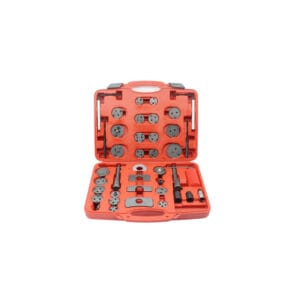
You select a tool that already exists in the manufacturer's range — for example a 37-piece brake caliper wind back tool kit — and apply your own branding: your logo, your packaging design, your instruction manual language. The product itself is unchanged. This route can reduce the amount of product development required before launch: samples can be confirmed before production and the specification is stable.
Path 2: Modified Existing Product
You start from an existing model and request changes — a different case or bag type, a different colour scheme, or, for set-based products, a different piece configuration. Whether a specific change is practical depends on the product and should be confirmed case by case, not assumed: some changes affect only branding or packaging, while others may require engineering review or new tooling.
Path 3: Custom Development
For requirements that no existing product covers, development starts from a technical drawing, a physical sample, a reference image, or a clear description of the repair task the tool must perform. The manufacturer reviews feasibility and proposes the most practical development route.
What to Confirm Before You Commit
Because OEM, ODM and private label mean different things to different manufacturers, put the sourcing model in writing. The questions that matter:
Who owns the product design?
Which elements are fixed, and which can be changed?
Is new tooling required for your requirements?
If tooling is required, who owns it?
What happens to your program if production is transferred?
The answers tell you more than any OEM or ODM label — and they are the same questions to ask before you compare quotations.
How to Start
Send the tool categories you need, your planned quantities, and any branding or modification requirements. We will confirm which of the three paths fits your program and what each would involve.